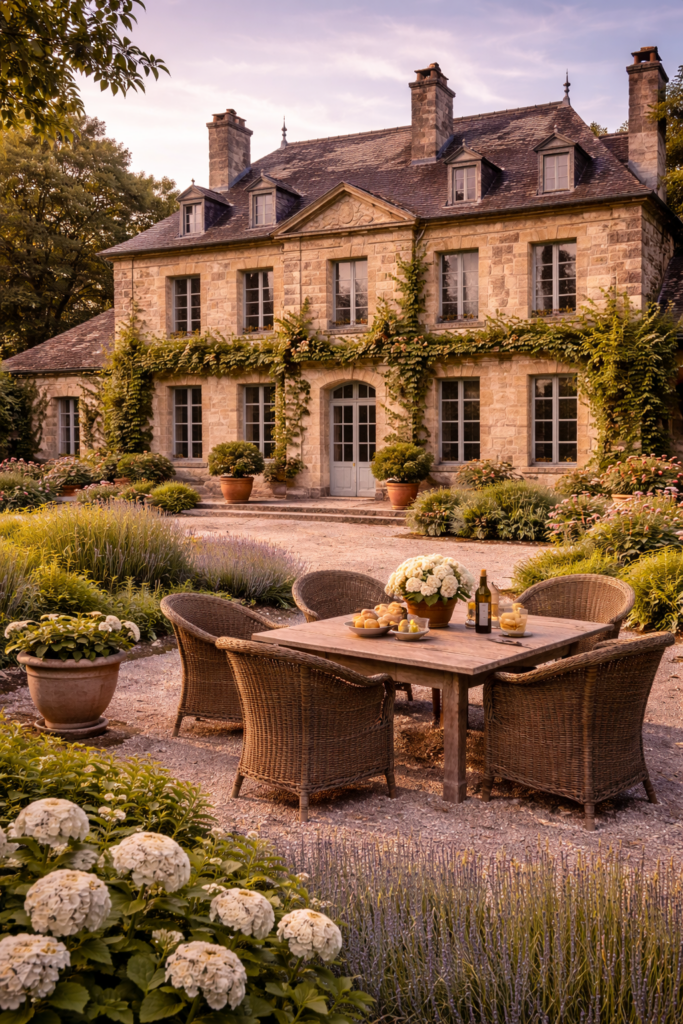
Renovating an older French home is never just a construction project.
It’s an act of interpretation.
Homes built in the 19th century — and many long before — were constructed with materials that behave in ways modern builders don’t always expect. Stone, lime, timber, earth floors, natural ventilation: these elements were designed to work together in a world without electricity, central heating, or modern insulation.
Before any renovation begins, the first task isn’t demolition or design.
It’s understanding.
How older French homes were originally designed to function
A 19th‑century home was built with a simple principle:
the building should manage moisture naturally.
Thick stone walls absorbed and released humidity.
Lime mortar allowed the structure to breathe.
Small windows controlled heat and light.
Timber frames flexed with the seasons.
Ventilation was passive, not mechanical.
Nothing was sealed. Nothing was airtight.
The house lived with the climate rather than resisting it. This is why older homes often feel comfortable even before renovation — they regulate themselves.
Where modern renovations go wrong
Problems begin when incompatible materials are introduced:
- Cement blocks moisture instead of allowing it to evaporate
- Plasterboard traps humidity behind walls
- Plastic paints seal surfaces that were meant to breathe
- Insulation is added without considering airflow
- Floors are replaced without understanding how moisture travels
- Concrete replaces lime, creating rigid points in a flexible structure
The result is predictable: damp patches, cold corners, peeling paint, and a house that feels “off.” The building isn’t failing. It’s reacting.
Reading the building before touching anything
Before any renovation begins, we spend time understanding the property’s history and structure:
- how the roof has settled over time
- the type and thickness of the stone
- the original lime mortar and where it has been replaced
- the direction the house faces
- the extensions added across decades
- the repairs done by previous owners
- the natural movement of the building
This early reading prevents the most expensive mistakes.
It’s the quiet part of the job that makes everything else smoother.
Why older homes require a different rhythm
Renovating a 19th‑century home isn’t slow — it’s paced.
Lime needs time to cure.
Stone needs time to dry.
Timber needs time to settle after structural changes.
Moisture levels need time to rebalance after insulation upgrades.
Trying to rush these steps often leads to problems later.
Working with the building’s natural rhythm produces results that last.
What “good renovation” means for older French homes
A successful renovation doesn’t erase the building’s age.
It respects it.
It means:
- choosing materials that work with the original structure
- improving comfort without blocking natural ventilation
- adding insulation in a way that doesn’t trap moisture
- opening spaces without compromising stability
- modernising carefully, not aggressively
- understanding the building’s logic before changing it
Older homes don’t resist renovation.
They resist renovation that misunderstands them.
A final thought
If you own an older French home — or you’re thinking of buying one — the most important step is understanding how the building was designed to function.
Once you know that, every renovation decision becomes clearer. And the house rewards you for it.
If you’re considering work on an older French home, we’re always happy to discuss your project and help you understand the best way forward.